


Choosing the right rug size can completely transform the look and feel of your home. A well-sized rug brings furniture together, adds warmth, improves visual balance, and makes a room feel more inviting. However, selecting the wrong size can make even a beautifully decorated space appear smaller, disconnected, or unfinished.
In Indian homes, where room layouts vary considerably between compact apartments, spacious flats, and independent houses, choosing the right rug requires more than simply measuring the floor. You need to consider your furniture arrangement, room dimensions, walking space, flooring, and the overall style of your interiors.
Whether you live in a 2BHK apartment in a metropolitan city or a spacious 3BHK home with separate living and dining areas, this guide will help you choose the ideal rug size for every room.
At Bhadohi Loom, we believe that the right handmade rug should complement your space while reflecting your personal style. From contemporary abstract designs to textured wool rugs and timeless handcrafted patterns, the right size helps you enjoy your rug's design to its fullest.
Why Does Rug Size Matter?
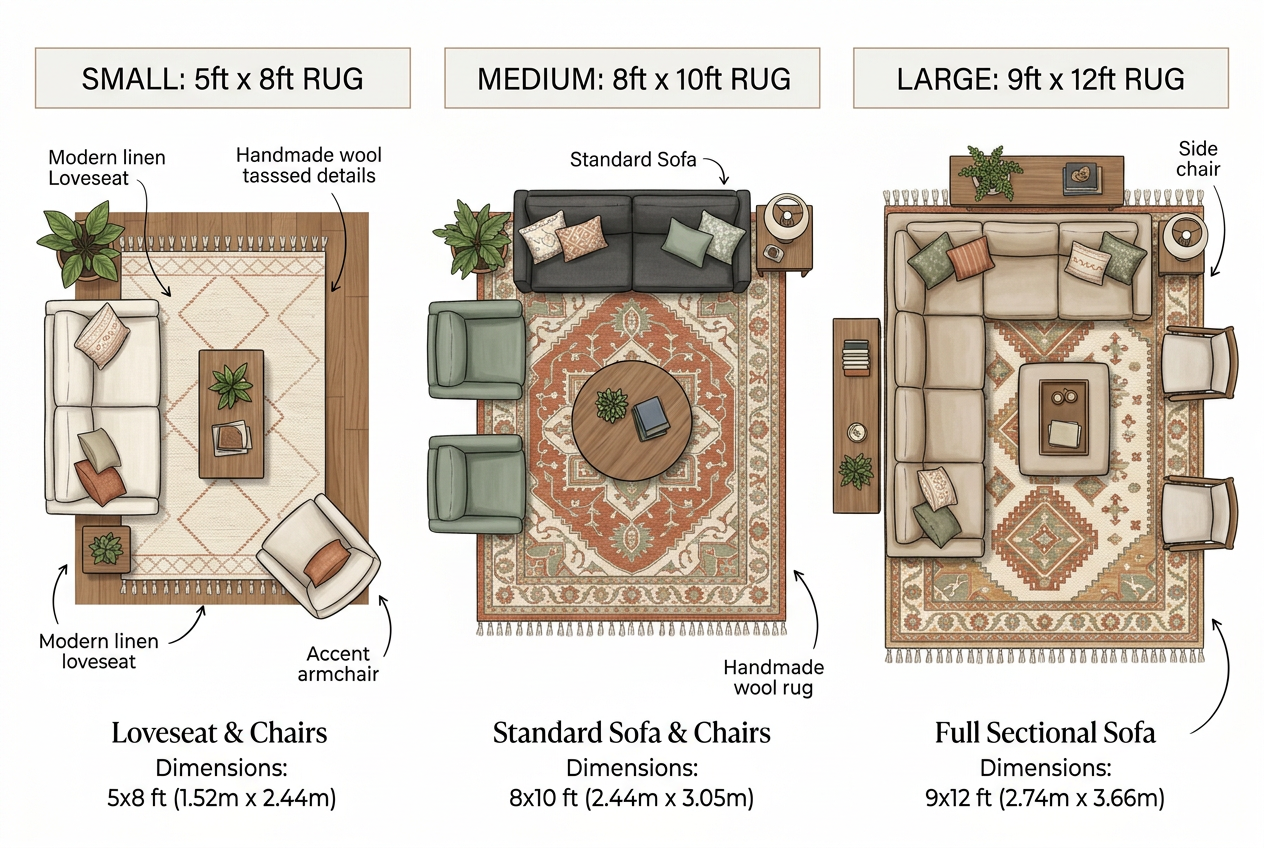
A rug is more than a decorative accessory. It helps define different areas of a room, connects furniture visually, and creates a comfortable foundation for everyday living.
A rug that is too small may look like an isolated mat placed in the middle of a room. On the other hand, an oversized rug can cover too much of the flooring, make furniture arrangements feel cramped, or interfere with doorways.
Choosing the right rug size offers several benefits.
1. Creates visual balance
A properly sized rug connects your sofa, coffee table, accent chairs, or bed into a coordinated arrangement. It makes the furniture appear intentionally placed rather than scattered around the room.
2. Makes rooms feel more spacious
A rug that extends beneath the main furniture can make a compact room feel more organised and visually expansive. The key is to select a size that fits the furniture layout without obstructing movement.
3. Defines different living areas
Open-plan homes often combine the living and dining areas in one large space. Separate rugs can help establish distinct zones without requiring partitions or additional furniture.
4. Adds comfort and warmth
Rugs provide a softer surface underfoot, particularly in bedrooms and living rooms. Wool rugs can also add a rich, tactile quality to contemporary and traditional interiors.
5. Enhances your interior design
The rug's size determines how much of its colour, pattern, and texture is visible. A larger rug may showcase an intricate design more effectively, while a smaller accent rug can highlight a specific corner or piece of furniture.
Understanding Common Rug Sizes in India
Before choosing a rug for your home, familiarise yourself with common rug dimensions. The best size depends on your room measurements and furniture placement, rather than the number of bedrooms alone.
Here are some commonly used rug sizes and where they may work best.
| Rug size | Approximate dimensions in cm | Best suited for |
|---|---|---|
| 2 × 3 ft | 61 × 91 cm | Small entryways and bedside accents |
| 3 × 5 ft | 91 × 152 cm | Compact seating areas and small bedrooms |
| 4 × 6 ft | 122 × 183 cm | Small living rooms, study areas, and bedroom accents |
| 5 × 7 ft | 152 × 213 cm | Compact living rooms and small bedrooms |
| 6 × 9 ft | 183 × 274 cm | Medium living rooms and larger bedroom arrangements |
| 8 × 10 ft | 244 × 305 cm | Spacious living rooms and king-size bedroom layouts |
| 9 × 12 ft | 274 × 366 cm | Large living rooms and open-plan spaces |
| 10 × 14 ft | 305 × 427 cm | Extra-large rooms and expansive seating arrangements |
These are approximate conversions. Always check the actual product dimensions before purchasing, because rug dimensions and available sizes vary by design and manufacturer.
What Size Rug Is Best for a 2BHK Home?
A typical 2BHK home has two bedrooms, a hall or living room, a kitchen, and one or more bathrooms. Some layouts also include a balcony, dining area, or separate entrance.
Because 2BHK apartments vary widely in size, you should choose rugs according to individual room measurements and furniture placement.
1. Living Room Rug Sizes for a 2BHK

The living room is often the best place to introduce a statement rug. It is where family members relax, guests gather, and much of the home's decorative character comes together.
For a compact living room, a 5 × 7 ft rug may work well beneath a coffee table and in front of a sofa. A 4 × 6 ft rug may suit a smaller seating arrangement, although it can look undersized if the sofa and chairs extend far beyond it.
For a medium-sized living room, consider a 6 × 9 ft rug. It can accommodate a larger coffee table and allow the front legs of a sofa and accent chairs to rest on the rug.
An 8 × 10 ft rug may be more appropriate for a spacious hall or a living room with a large sectional sofa.
A practical living room sizing guide:
-
Compact living room: 5 × 7 ft or 6 × 9 ft, depending on furniture.
-
Medium living room: 6 × 9 ft or 8 × 10 ft.
-
Large living room: 8 × 10 ft or 9 × 12 ft.
These are starting points, not fixed rules. Measure the complete seating arrangement before selecting a size.
How to place the rug: Ideally, place the rug beneath the front legs of the sofa and chairs. This creates a connected seating area without requiring the entire furniture set to sit on the rug.
If you prefer a more luxurious, unified look, choose a rug large enough for all the main seating furniture to rest on it, provided sufficient clearance remains around the edges.
2. Bedroom Rug Sizes for a 2BHK
A bedroom rug should make the space feel comfortable and balanced without blocking cupboards, doors, or walking paths.
For a small bedroom with a single or double bed, a 5 × 7 ft rug may work well when placed partly beneath the bed. A 6 × 9 ft rug can provide a more generous border around a larger bed.
For a king-size bed, an 8 × 10 ft rug is often a good starting point if the room has enough space. A 6 × 9 ft rug may also work in a compact room, depending on the bed's dimensions and the available floor area.
There are three common placement options:
Option 1: Place the rug beneath the lower two-thirds of the bed.
Position the rug so it extends beyond both sides and the foot of the bed. This creates a soft landing area when you get up.
Option 2: Place a large rug beneath the entire bed arrangement.
This works particularly well in spacious bedrooms. Ideally, the rug extends beyond the sides and foot of the bed while remaining clear of wardrobe doors.
Option 3: Use two bedside rugs or runners.
In a compact bedroom, a pair of smaller rugs can provide comfort without requiring one large rug. Choose complementary designs or matching pieces for a coordinated look.
3. Dining Area Rug Sizes for a 2BHK
If your home has a separate dining area or a dining table within the living room, the rug should extend beyond the table so chairs remain on it when people sit down or stand up.
A useful guideline is to leave approximately 24–30 inches of additional rug space beyond the table edges, where the room allows it. This provides room for chairs to slide back without catching on the rug's edge.
For example:
-
A small four-seater dining table may work with a 6 × 9 ft rug, depending on the table dimensions.
-
A larger six-seater may need an 8 × 10 ft rug or another appropriately measured size.
-
A compact dining nook may be better without a rug if chair movement is restricted.
Measure the table with the chairs pulled out before making your decision.
For dining areas, consider a relatively low-pile rug that is easier to vacuum and maintain. A rug that is too thick may make chair movement difficult.
4. Entryway and Balcony Rugs for a 2BHK
Small rugs can add personality to areas that are often overlooked.
For an entryway, a 2 × 3 ft rug or a narrow runner may work well, depending on the doorway and available floor space. Ensure that the rug does not interfere with the door's movement.
For a balcony or enclosed sunroom, choose a size that leaves adequate space around furniture and keeps drainage areas accessible.
Before placing a handmade wool rug in a balcony, check whether the area is fully protected from rain, direct sunlight, and moisture. Wool and other natural fibres require appropriate care and are not automatically suitable for outdoor exposure.
For uncovered balconies, choose a rug specifically designed for outdoor conditions rather than using an indoor wool rug.
What Size Rug Is Best for a 3BHK Home?
A 3BHK home typically offers more flexibility, with three bedrooms and often a larger living room, a dedicated dining space, or an additional family lounge.
However, a 3BHK does not always mean every room requires a bigger rug. A compact bedroom in a 3BHK apartment may need the same size as a bedroom in a 2BHK.
The main difference is that larger homes may have more opportunities to use rugs to define separate areas.
1. Living Room Rug Sizes for a 3BHK

In a spacious living room, the rug should anchor the entire main seating arrangement.
An 8 × 10 ft rug is a good starting point for many medium-to-large seating areas. For larger rooms with a sectional sofa, two accent chairs, and a generous coffee table, a 9 × 12 ft rug may provide better coverage.
Consider the following:
-
Medium living room: 6 × 9 ft or 8 × 10 ft.
-
Large living room: 8 × 10 ft or 9 × 12 ft.
-
Extra-large living room: 9 × 12 ft or larger, if the room measurements support it.
If the room contains multiple seating arrangements, consider using separate rugs to distinguish the main conversation area from a reading nook or secondary lounge.
For example, a large neutral rug beneath the main sofa and coffee table can be paired with a smaller accent rug beneath a reading chair.
Choose colours and textures that complement one another without making the space look visually cluttered.
2. Master Bedroom Rug Sizes for a 3BHK
The master bedroom often accommodates a king-size bed, bedside tables, and sometimes a bench or lounge chair.
An 8 × 10 ft rug can work beautifully beneath a king-size bed in a suitably sized room. If the bedroom is particularly spacious, a 9 × 12 ft rug may provide a more substantial border around the bed and additional furniture.
For smaller master bedrooms, a 6 × 9 ft rug may be a practical alternative.
The ideal placement depends on whether you want the rug to frame the bed, extend beneath the bedside tables, or cover more of the floor around the bed.
A neutral wool rug can create a calm, comfortable foundation, while an abstract or geometric design can introduce contrast into a minimalist bedroom.
Before purchasing, check the clearance between the rug and built-in wardrobes, dressing units, and bedroom doors.
3. Children's Bedroom Rug Sizes
The second or third bedroom in a 3BHK home may serve as a child's bedroom, guest room, or study.
A 4 × 6 ft or 5 × 7 ft rug may be suitable for a smaller bedroom, depending on the bed and available floor area. A 6 × 9 ft rug may be appropriate for a larger room that needs a defined play or study area.
For a child's bedroom, consider:
-
Soft textures that feel comfortable underfoot.
-
Designs that complement the room's colour scheme.
-
Practical pile heights that are easy to vacuum.
-
A suitable non-slip rug pad, where appropriate.
-
Enough clearance for cupboard doors and other furniture.
If the rug will be used as a play area, choose a durable design and follow the manufacturer's cleaning and care instructions.
4. Guest Bedroom Rug Sizes
Guest bedrooms do not always need large rugs. A thoughtfully placed 5 × 7 ft rug can add comfort and visual warmth without overwhelming the room.
If the guest room has a queen-size bed and sufficient space, a 6 × 9 ft rug may create a more generous appearance.
For a compact guest room, two smaller bedside rugs may be more practical than a large rug beneath the bed.
Choose versatile colours such as ivory, beige, muted green, or soft terracotta if you want the room to coordinate easily with different bedding styles.
5. Dining Room Rug Sizes for a 3BHK
If your 3BHK has a separate dining room, the rug should be large enough to accommodate the dining table and chairs.
A six-seater dining table may suit an 8 × 10 ft rug in many layouts, while a larger table may require a 9 × 12 ft rug or a custom-sized option.
However, table dimensions matter more than the number of seats. A long rectangular table and a round six-seater can require different rug shapes and dimensions.
For a round dining table, consider a round rug that extends sufficiently beyond the chairs. For a rectangular table, a rectangular rug is often the easiest option.
If your dining space is narrow, ensure that the rug does not obstruct movement between the dining chairs and nearby walls.
How to Choose a Rug Size for Different Furniture Layouts
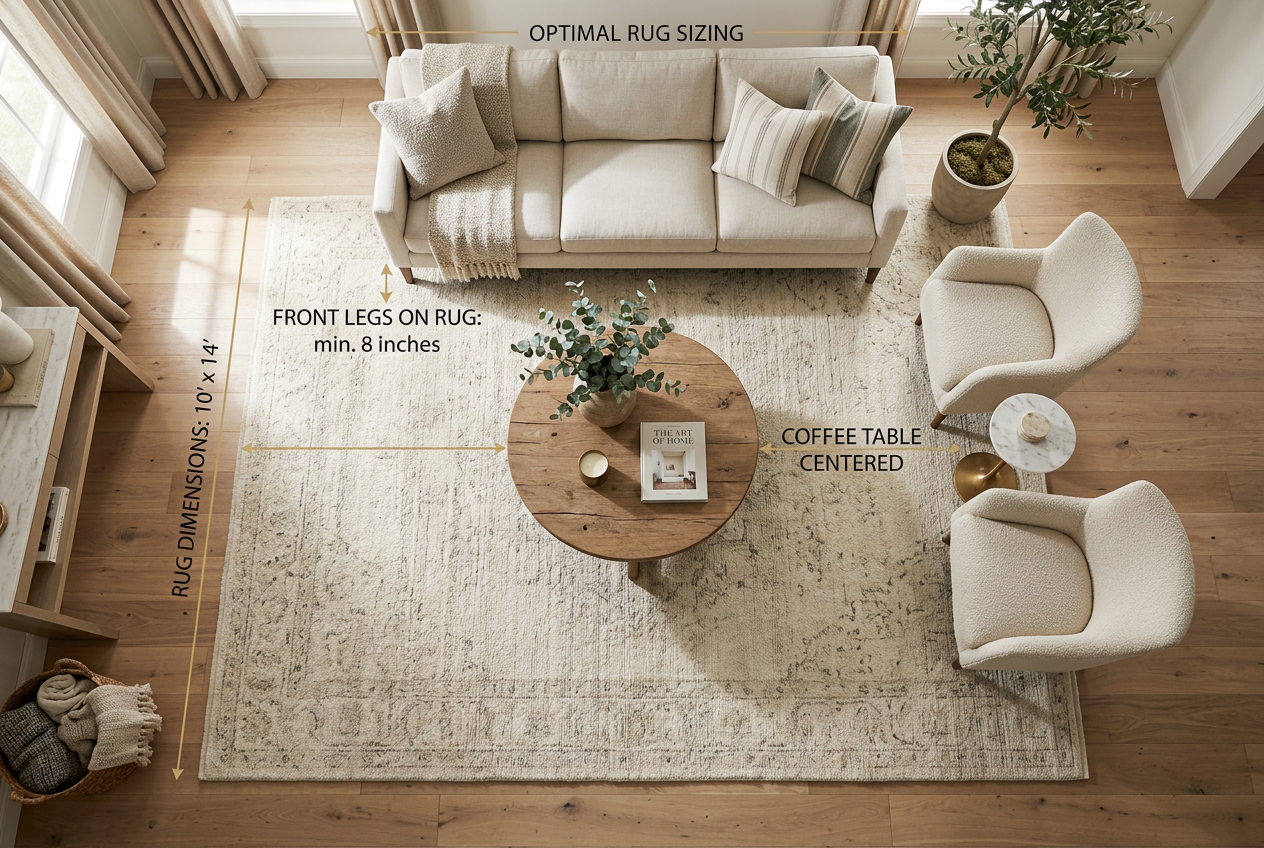
Room dimensions alone do not determine the ideal rug size. Your furniture arrangement is equally important.
The front-legs-on-rug rule
This is one of the most versatile approaches for living rooms.
Position the rug so the front legs of the sofa and accent chairs rest on it while the rear legs remain on the floor.
This arrangement visually connects the furniture and works well in many medium-sized Indian living rooms.
The all-legs-on-rug approach
If your living room is spacious, place all the main seating furniture on the rug.
This creates a more unified and luxurious appearance. It is especially effective when the rug is large enough to extend beyond the furniture without touching the walls.
The coffee-table-only approach
A smaller rug placed beneath a coffee table can work in a compact seating area or a deliberately layered design.
However, the rug should still feel proportionate to the surrounding furniture. If it is much smaller than the coffee table and sofa arrangement, the room may appear disconnected.
The floating rug approach
A floating rug sits independently in a room rather than extending beneath the main furniture.
This can work well in minimalist interiors, reading corners, and rooms with carefully spaced furniture.
The important thing is to make the arrangement look intentional rather than as though the rug is too small.
How Much Space Should You Leave Around a Rug?
Leaving visible flooring around a rug can make a room feel balanced and prevent the space from appearing overcrowded.
In many rooms, leaving approximately 12–18 inches of visible flooring around the rug creates a pleasing border. Larger rooms may accommodate more space, while compact rooms may need less.
These measurements are guidelines rather than strict requirements.
For example, a 6 × 9 ft rug may work in a medium-sized living room when it anchors the seating area and leaves a clear border around the arrangement.
In a smaller apartment, a rug may sit closer to the walls if that arrangement suits the furniture and maintains clear walking paths.
Always prioritise safe movement, door clearance, and furniture stability over a particular decorative measurement.
Should You Choose a Rectangular, Round, or Runner Rug?

The shape of your rug influences how the room feels and how furniture relates to the floor.
Rectangular rugs
Rectangular rugs are versatile and work well in living rooms, bedrooms, dining areas, and larger open-plan spaces. They are often the easiest choice for placing beneath sofas, beds, and rectangular dining tables.
Round rugs
Round rugs can soften rooms dominated by straight lines and rectangular furniture. They work particularly well beneath round coffee tables, in reading corners, and in smaller spaces where you want to create a focal point.
For a round rug, choose a diameter that accommodates the furniture arrangement rather than selecting one based solely on the room's dimensions.
Runner rugs
Runners are long, narrow rugs suited to hallways, passages, bedside spaces, and certain kitchen layouts.
Before buying a runner, measure both the length and width of the available floor space. Leave enough clearance around doors and furniture to prevent the rug from becoming an obstruction.
Which Rug Material Is Best for Indian Homes?
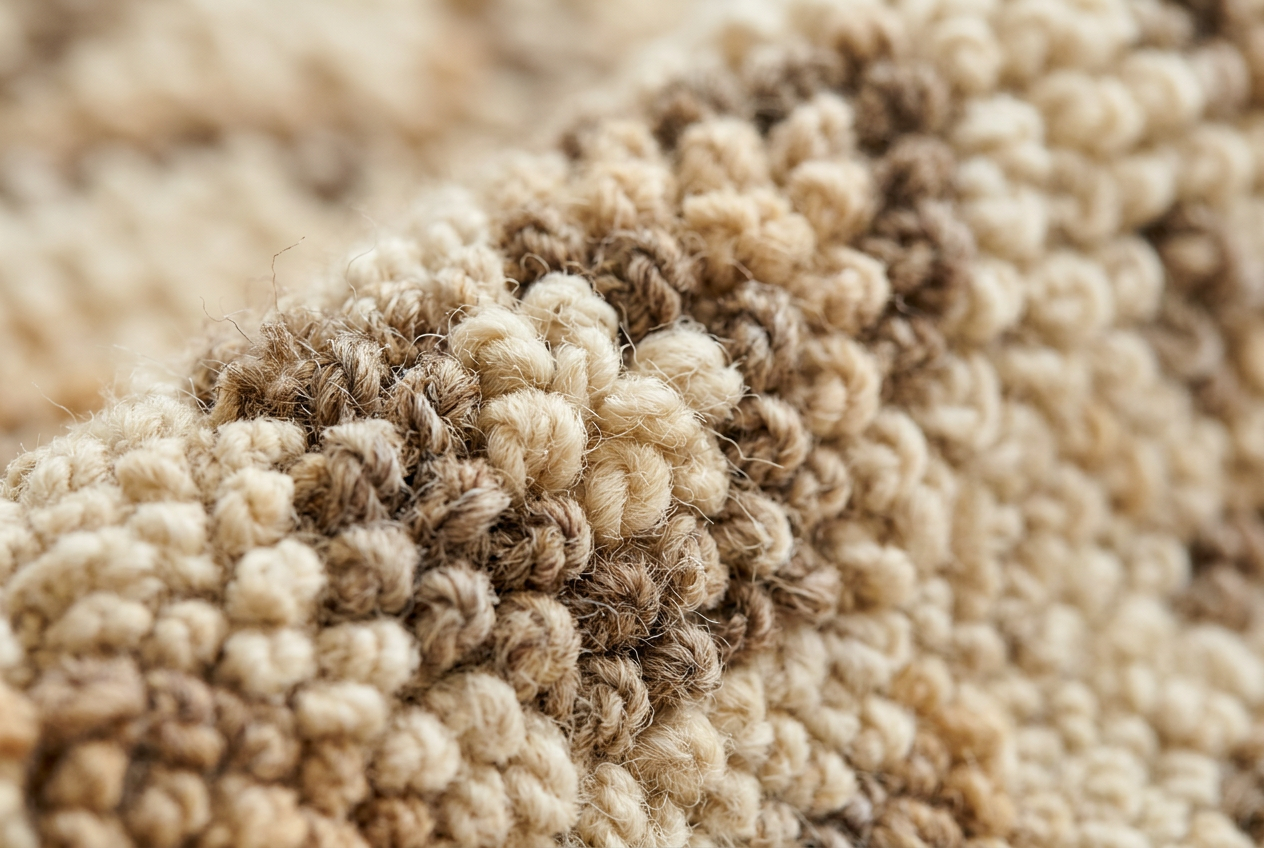
After choosing the right size, consider the material that suits your room and lifestyle.
Wool rugs
Wool rugs offer a naturally soft feel and a rich appearance. They are popular in living rooms and bedrooms because they provide texture and warmth.
Handmade wool rugs can work particularly well in spaces where craftsmanship and design are important. However, their maintenance requirements depend on the construction, dye, pile, and manufacturer's instructions.
Cotton rugs
Cotton rugs can provide a lighter, casual appearance. They may be suitable for selected bedrooms, smaller seating areas, and informal spaces, depending on their construction and care requirements.
Jute and other natural-fibre rugs
Jute rugs bring an earthy texture that complements wooden furniture, neutral interiors, and natural design schemes.
Natural-fibre rugs can be sensitive to moisture and certain cleaning methods, so check the product's care instructions before placing one in a humid or spill-prone area.
Hand-tufted rugs
Hand-tufted rugs offer considerable variety in colour, pattern, texture, and pile height. They can be a good choice when you want a distinctive design for a living room or bedroom.
Hand-knotted rugs
Hand-knotted rugs are made by tying individual knots and are valued for their craftsmanship. Their cost and characteristics vary depending on the materials, knot density, design complexity, and production time.
Regardless of the material, choose a rug that suits the room's foot traffic, cleaning needs, and intended use.
Common Rug-Sizing Mistakes to Avoid
Even a beautiful rug can look out of place if the dimensions do not suit the room.
1. Buying a rug before measuring the furniture
Measure your sofa, bed, dining table, and available floor area before deciding on a rug size.
2. Choosing a rug that is too small
A tiny rug in the middle of a large seating arrangement can make the furniture appear disconnected. Consider whether the rug should extend beneath the sofa or chairs.
3. Ignoring door clearance
Thick rugs may interfere with doors, particularly in compact bedrooms and entryways. Check the rug's pile height and the door's clearance before ordering.
4. Forgetting dining chair movement
Dining chairs should remain on the rug when pulled out. Measure the full arrangement with the chairs extended.
5. Ignoring room shape
A long, narrow room may need a different arrangement from a square room with similar floor area. Choose dimensions that suit the layout.
6. Overlooking maintenance
A high-pile rug may feel luxurious but may require more attention in busy areas. Consider the household's cleaning routine and everyday needs.
7. Forgetting a rug pad
A suitable rug pad can help reduce slipping and protect the flooring. Ensure the pad is compatible with your floor type and rug backing.
Can You Order a Custom-Sized Rug for Your Home?

Standard rug sizes are convenient, but some rooms have unusual dimensions or furniture layouts.
A custom-sized rug may be useful when you have an extra-wide living room, a long dining table, a particular bed arrangement, or an open-plan space that requires precise coverage.
Before requesting a custom rug, measure the intended area carefully and mark the proposed rug dimensions on the floor using painter's tape. This helps you visualise how the rug will sit beneath your furniture.
Consider these questions:
-
Will the sofa's front legs sit on the rug?
-
Will the rug leave sufficient walking space?
-
Can cupboard and room doors open freely?
-
Will dining chairs remain on the rug when pulled out?
-
Does the selected shape suit the furniture?
-
Will the rug's colour and texture complement the room?
If you're unsure, consult a rug specialist before confirming your measurements.
At Bhadohi Loom, handmade rugs offer an opportunity to bring craftsmanship, texture, and carefully selected designs into your home. Explore the available sizes and designs to find an option that suits your space and interior style.
Final Rug Size Checklist for Your 2BHK or 3BHK Home
Before purchasing a rug, take a few minutes to check the following:
-
Measure the room and the main furniture.
-
Decide which furniture should sit on the rug.
-
Mark the proposed dimensions on the floor.
-
Check walking paths and door clearance.
-
Measure dining tables with chairs pulled out.
-
Select a suitable shape, material, and pile height.
-
Check the exact product dimensions and care instructions.
-
Consider a rug pad if it is appropriate for your flooring.
The best rug is not necessarily the largest or most expensive one. It is the rug that fits your room, supports your furniture arrangement, and complements your home's design.
Whether you're furnishing a compact 2BHK apartment or styling a spacious 3BHK home, careful measurements can help you make a confident choice.
Explore Bhadohi Loom's handmade rug collections to find colours, textures, and designs that bring your living spaces together.
Find the right rug for your home with Bhadohi Loom — handcrafted luxury from the Carpet City of India.
Frequently Asked Questions
1. What is the best rug size for a 2BHK living room?
A 5 × 7 ft or 6 × 9 ft rug may suit a compact 2BHK living room, while an 8 × 10 ft rug may work better in a spacious hall. The ideal size depends on your sofa dimensions, furniture layout, and available floor space.
2. What size rug is best for a 3BHK living room?
An 8 × 10 ft rug is a useful starting point for many medium-to-large living rooms in a 3BHK home. Larger seating arrangements may require a 9 × 12 ft rug or another suitable size.
3. Is a 6 × 9 ft rug big enough for a living room?
A 6 × 9 ft rug can work well in a medium-sized living room, especially when placed beneath the front legs of the sofa and chairs. Measure your furniture arrangement to confirm the fit.
4. What size rug should I buy for a king-size bed?
An 8 × 10 ft rug is a common starting point for a king-size bed in a suitably sized bedroom. A 6 × 9 ft rug may work in a smaller room, while larger bedrooms may accommodate a 9 × 12 ft rug.
5. Should a living room rug go under the sofa?
Ideally, the rug should extend beneath at least the front legs of the sofa. This helps connect the seating arrangement and creates a more balanced appearance.
6. How much bigger should a rug be than a dining table?
Where space allows, aim for approximately 24–30 inches of extra rug space beyond each edge of the dining table. This helps chairs remain on the rug when pulled out.
7. Can I use the same rug size in a 2BHK and a 3BHK?
Yes. Rug size should be based on individual room dimensions and furniture placement, not the number of bedrooms in your home.
8. Is a round rug suitable for a small living room?
Yes. A round rug can soften a compact living room and work well beneath a round coffee table or in a reading corner. Choose a diameter that suits the furniture and leaves adequate walking space.
