


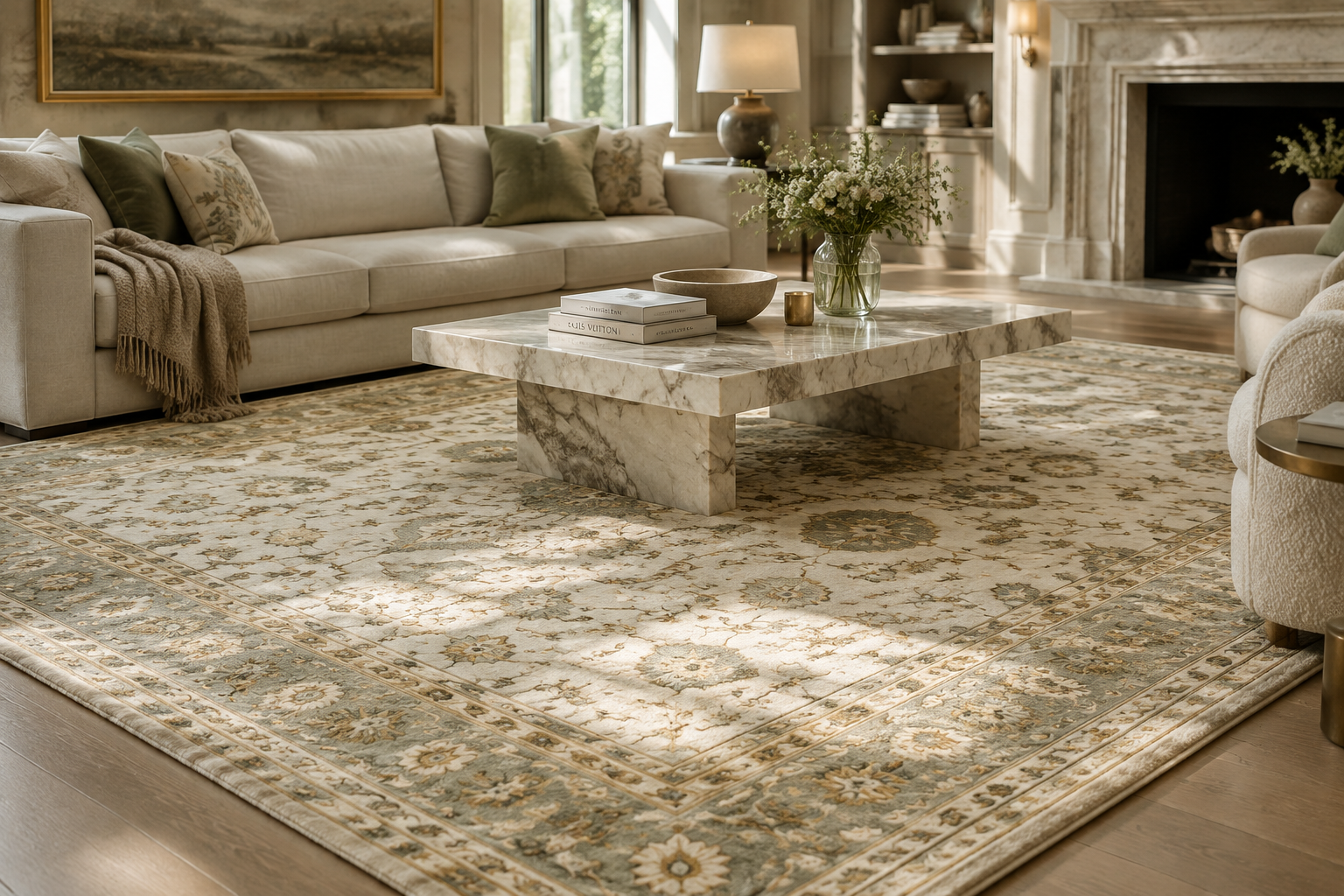
When choosing a premium rug for your home, the material matters just as much as the color, pattern, size, and design. Two materials that have become increasingly popular in modern handmade rugs are wool and Tencel.
Both can create beautiful, luxurious rugs, but they offer different characteristics. Wool is known for its durability, warmth, resilience, and timeless appeal, while Tencel is appreciated for its exceptional softness, subtle sheen, rich colors, and luxurious appearance.
So, which is better: wool or Tencel?
The answer depends on how you plan to use the rug.
A wool rug can be an excellent choice for high-traffic areas such as living rooms, bedrooms, hallways, and family spaces where durability is important. Tencel, on the other hand, can be ideal when your priority is a silky-soft feel, sophisticated appearance, and a beautiful decorative finish.
In this guide, we will compare wool vs Tencel rugs in detail, including their durability, softness, appearance, maintenance, sustainability, comfort, cost, and ideal applications.
What Is a Wool Rug?
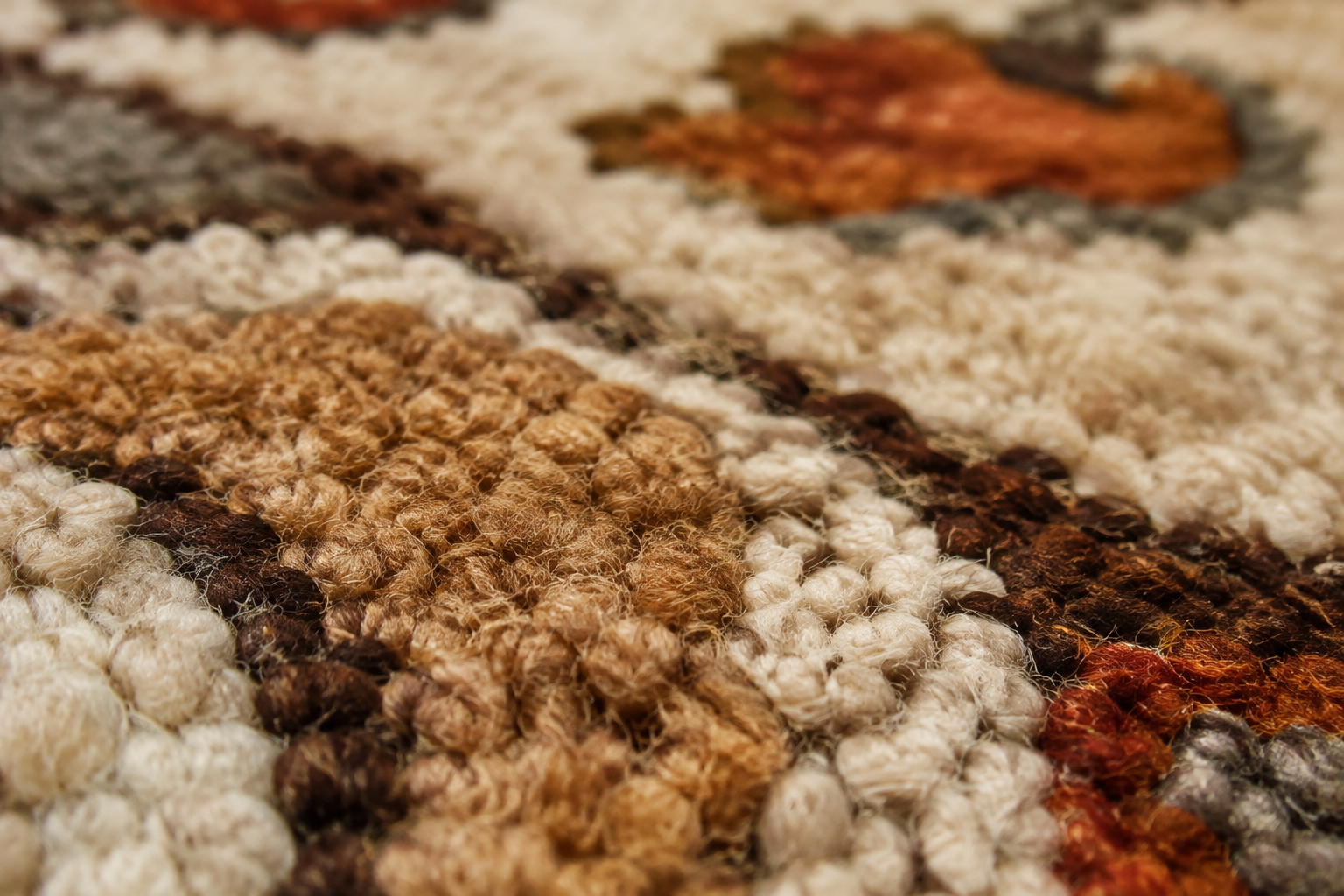
Wool is one of the most traditional materials used in handmade rugs and carpets. It is a natural animal fiber obtained primarily from sheep.
For centuries, artisans around the world have used wool to create rugs because of its combination of strength, resilience, softness, and natural beauty.
Wool fibers have a natural structure that allows them to bend and recover their shape. This makes wool particularly suitable for rugs that experience regular foot traffic.
Handmade wool rugs are available in many styles, including:
- Hand-knotted rugs
- Hand-tufted rugs
- Hand-woven rugs
- Flatweave rugs
- Traditional Persian-inspired designs
- Modern abstract rugs
- Contemporary geometric rugs
- Textured rugs
One of the biggest advantages of wool is its versatility. It can work equally well in traditional interiors and modern minimalist homes.
What Is Tencel?
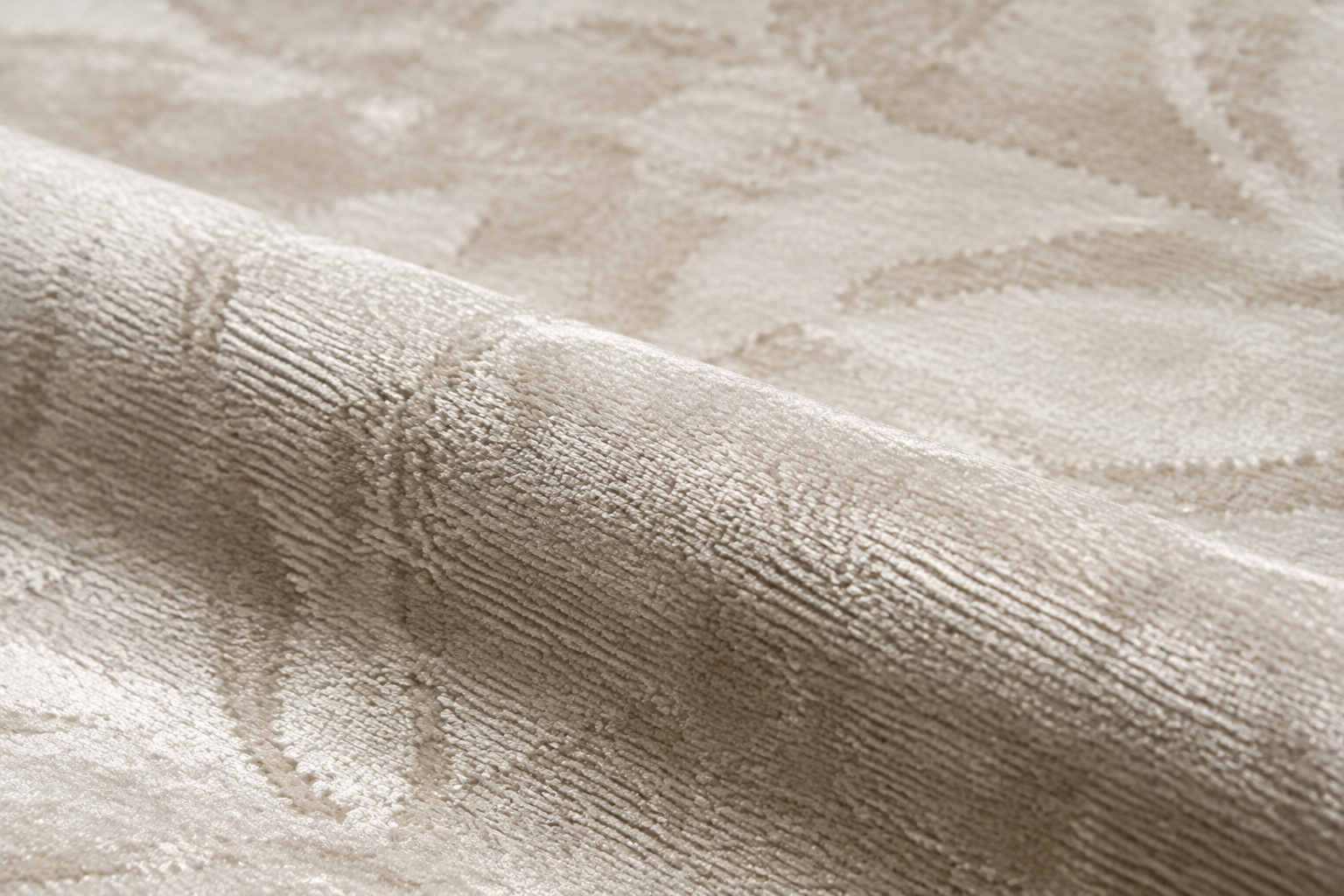
Tencel is a branded fiber made from cellulose, commonly derived from sustainably managed wood sources. It is widely recognized for its smooth texture, softness, and elegant appearance.
In the rug industry, Tencel is often used in blends or alongside other fibers to create rugs with a luxurious surface and distinctive visual character.
One of the most noticeable characteristics of Tencel is its soft, silky feel.
Depending on how the rug is constructed and the direction of the fibers, Tencel can also create beautiful changes in light reflection. This can give a rug a subtle sheen that makes colors appear richer and more dynamic.
Tencel rugs are particularly popular for:
- Luxury bedrooms
- Stylish living rooms
- Decorative spaces
- Contemporary interiors
- Low-to-moderate traffic areas
- Spaces where softness and visual appeal are priorities
Wool vs Tencel: At a Glance
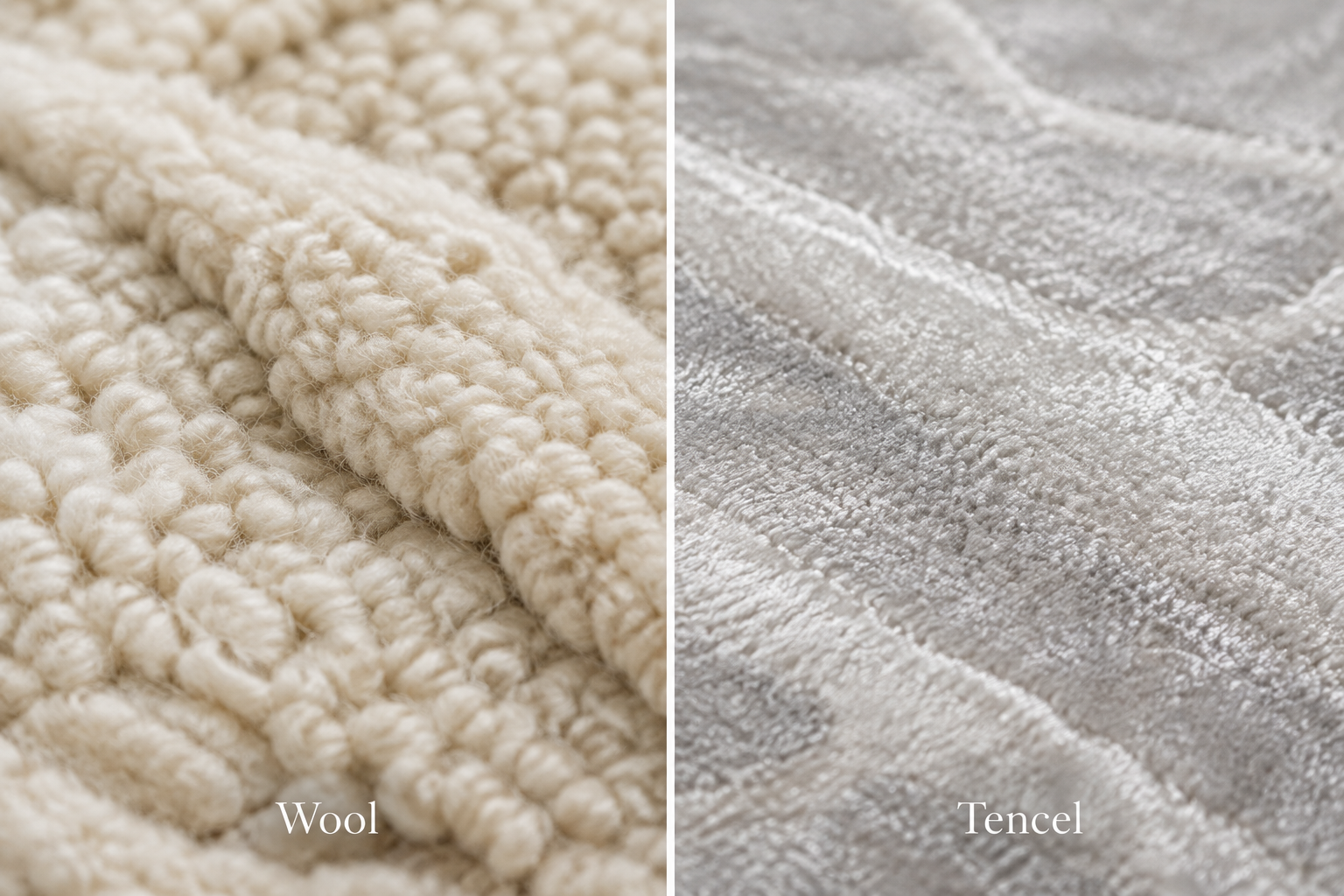
Before going into the details, here is a quick comparison.
| Feature | Wool | Tencel |
|---|---|---|
| Material type | Natural animal fiber | Cellulose-based regenerated fiber |
| Softness | Very good | Excellent |
| Durability | Excellent | Good, depending on construction |
| Resilience | Excellent | Moderate to good |
| Appearance | Warm and natural | Silky and sophisticated |
| Sheen | Low to moderate | Naturally higher |
| Warmth | Excellent | Moderate |
| Moisture handling | Good | Good |
| High-traffic suitability | Excellent | Better for moderate traffic |
| Maintenance | Relatively easy | Requires more care |
| Best for | Everyday use | Luxury/decorative spaces |
| Longevity | Excellent | Depends heavily on construction and use |
| Feel | Soft, warm and substantial | Smooth, silky and luxurious |
There is no single winner in every category. The best choice depends on your lifestyle and the room where the rug will be placed.
1. Wool vs Tencel: Which Is Softer?
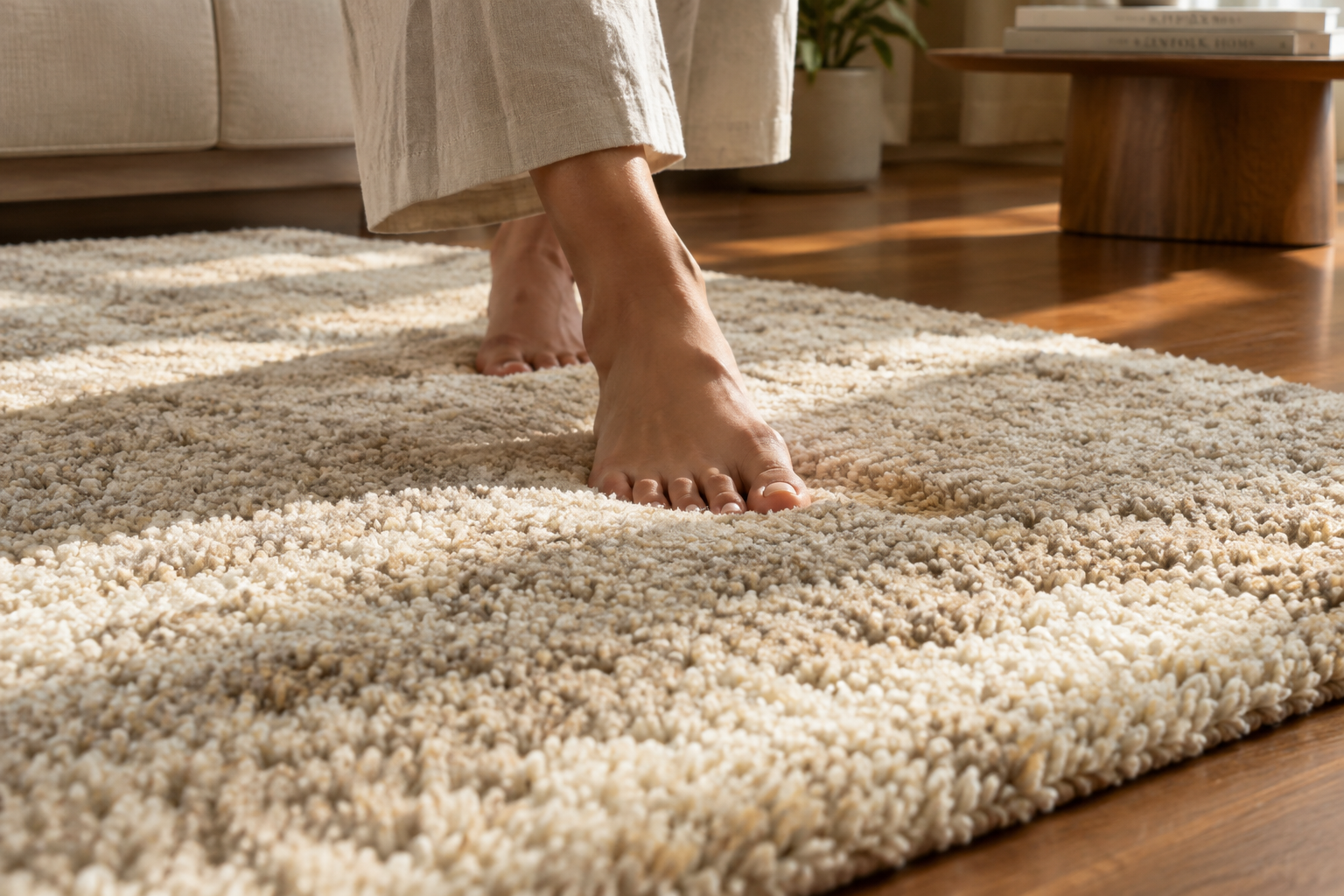
If softness is your main priority, Tencel generally has the advantage.
Tencel fibers have a smooth surface that gives them a soft, silky sensation underfoot. This makes Tencel rugs particularly appealing in bedrooms and other spaces where you want a luxurious tactile experience.
Wool is also naturally soft, but its feel can vary considerably depending on the type of wool, fiber quality, yarn construction, pile height, and rug-making technique.
High-quality wool can feel exceptionally comfortable underfoot.
Choose Tencel if:
- You want a silky feel.
- You prefer an ultra-soft surface.
- The rug is primarily decorative.
- You want a luxurious bedroom rug.
Choose wool if:
- You want softness combined with durability.
- The rug will receive regular foot traffic.
- You prefer a warmer, more natural texture.
2. Which Is More Durable: Wool or Tencel?
When it comes to durability, wool generally has the advantage.
Wool fibers are naturally resilient. They can compress under foot traffic and recover their shape, which makes wool particularly useful in frequently used areas.
This is one reason wool has remained one of the most popular materials for handmade rugs for generations.
However, durability isn't determined by fiber alone.
The overall lifespan of a rug also depends on:
- Knot density
- Weave or tuft construction
- Pile height
- Yarn quality
- Backing
- Construction quality
- Maintenance
- Amount of foot traffic
A well-made Tencel rug can still be durable and beautiful, but it is generally better suited to low-to-moderate traffic environments than extremely busy areas.
Best choice for high traffic:
Wool
For hallways, busy living rooms, family rooms, and frequently used spaces, wool is usually the safer choice.
3. Wool vs Tencel: Which Looks More Luxurious?
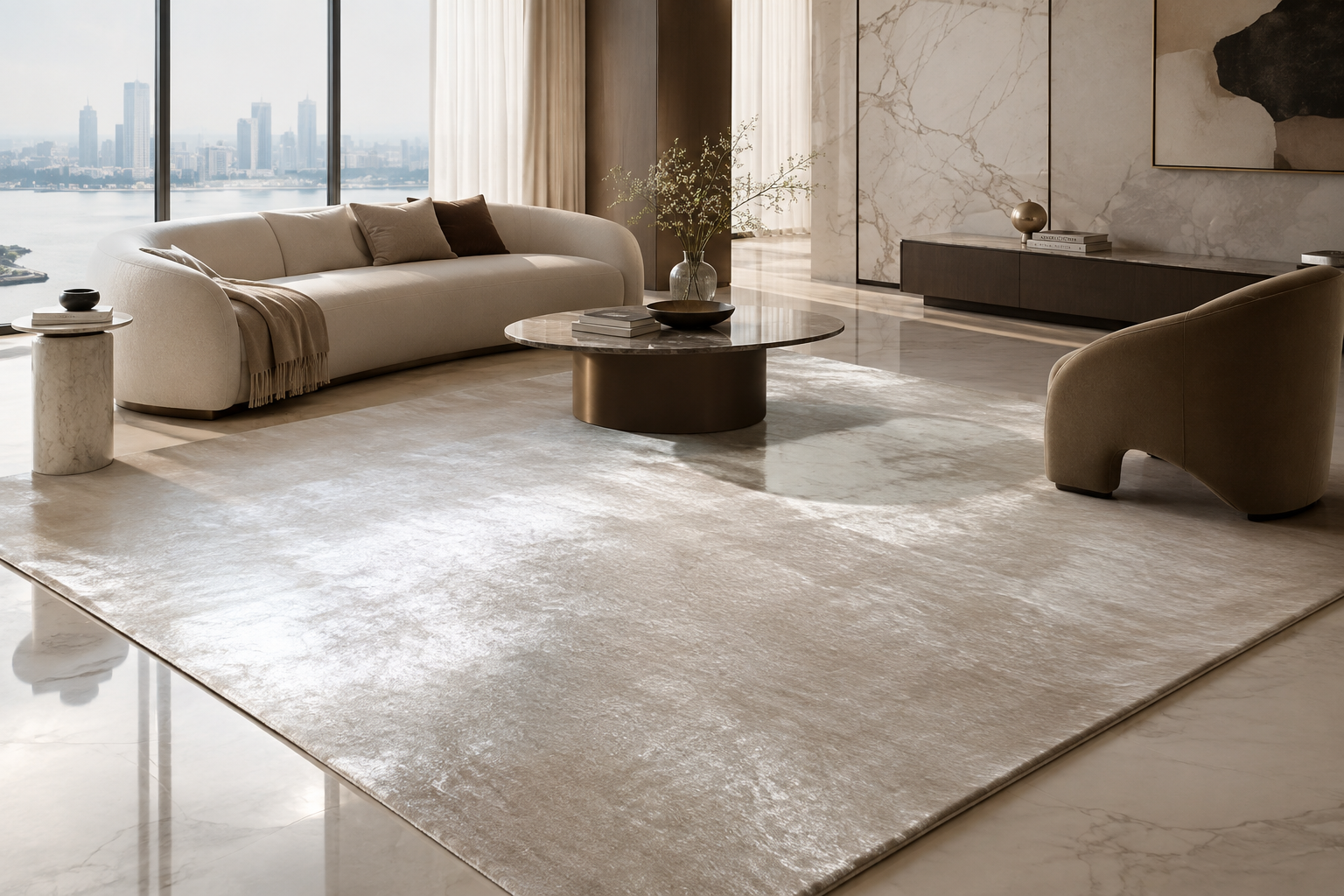
This is where Tencel can really stand out.
Tencel has a naturally smooth appearance and can create a subtle sheen that reflects light beautifully. This can make colors look deeper and give the rug a sophisticated, almost silk-like appearance.
This characteristic is particularly attractive in:
- Abstract rugs
- Modern rugs
- Floral designs
- Contemporary rugs
- Luxury interiors
- Decorative bedroom rugs
Wool, meanwhile, tends to have a more natural and understated appearance.
It can create:
- Warm textures
- Rich surfaces
- Organic patterns
- Soft visual depth
- A timeless handcrafted appearance
If you want a silky, elegant, contemporary look, Tencel may be your preference.
If you want a warm, natural, timeless look, wool may be better.
4. Wool vs Tencel for Living Rooms
Your living room is often one of the most important areas when choosing a rug.
It is usually a high-use space where family members, guests, children, and pets may spend considerable time.
For this reason, wool is often an excellent option.
A wool rug can provide:
- Durability
- Comfort
- Warmth
- Natural texture
- Long-term performance
Tencel can also look stunning in a living room, especially when the space has a sophisticated, contemporary aesthetic.
However, you should consider the amount of foot traffic.
Choose wool for:
- Busy family living rooms
- Homes with frequent guests
- High-traffic spaces
- Long-term everyday use
Choose Tencel for:
- Formal living rooms
- Low-traffic sitting areas
- Luxury interiors
- Decorative spaces
5. Which Is Better for Bedrooms?
For bedrooms, both materials can work beautifully.
Tencel can be particularly attractive because of its softness.
Imagine stepping out of bed in the morning and placing your feet on a soft, smooth rug. The luxurious texture of Tencel can make a bedroom feel more comfortable and refined.
Wool is also an excellent bedroom material because it provides:
- Warmth
- Softness
- Comfort
- Durability
- Natural texture
If your bedroom has a modern luxury aesthetic, Tencel may complement it beautifully.
For a cozy, warm, natural bedroom, wool can be an excellent choice.
6. Which Material Is Better for Indian Homes?
Indian homes can have very different interior styles, from traditional spaces to contemporary apartments and luxury villas.
The right material depends on the room.
For busy Indian households, wool can be a practical choice because of its durability and resilience.
For bedrooms, guest rooms, formal sitting areas, and low-traffic spaces, Tencel can provide a more luxurious decorative effect.
You should also consider the climate and room environment.
In warmer areas, a low-pile wool rug or lightweight construction can be more comfortable than a very thick rug.
In air-conditioned interiors, both wool and Tencel can work beautifully.
7. Wool vs Tencel: Which Is Easier to Maintain?
Wool generally has an advantage when it comes to everyday maintenance.
Regular vacuuming and prompt attention to spills can help keep a quality wool rug looking beautiful.
However, this does not mean wool rugs are maintenance-free.
You should:
- Vacuum regularly.
- Avoid allowing dirt to accumulate.
- Blot spills quickly.
- Avoid aggressive scrubbing.
- Rotate the rug periodically.
- Use professional cleaning when necessary.
Tencel rugs generally require more careful handling.
Because of their smooth, delicate appearance, aggressive cleaning methods can potentially damage the fibers or affect the appearance of the pile.
For a Tencel rug:
- Blot spills immediately.
- Avoid excessive moisture.
- Do not aggressively scrub.
- Follow the manufacturer's cleaning instructions.
- Consider professional cleaning for significant stains.
Always follow the care instructions supplied with your specific rug because construction and fiber blends can differ.
8. Which Material Is Better for Families With Children?
If you have children, durability should usually be one of your biggest considerations.
Children often mean:
- More foot traffic
- Spills
- Food crumbs
- Toys
- Frequent movement
- Everyday wear
For these situations, a well-made wool rug can be a practical choice.
Tencel can still be used in homes with children, but it may be better suited to areas where there is less activity.
If you love the appearance of Tencel but need additional durability, consider a wool-Tencel blend.
This can combine some of the characteristics of both materials.
9. Wool-Tencel Blend Rugs: The Best of Both Worlds?
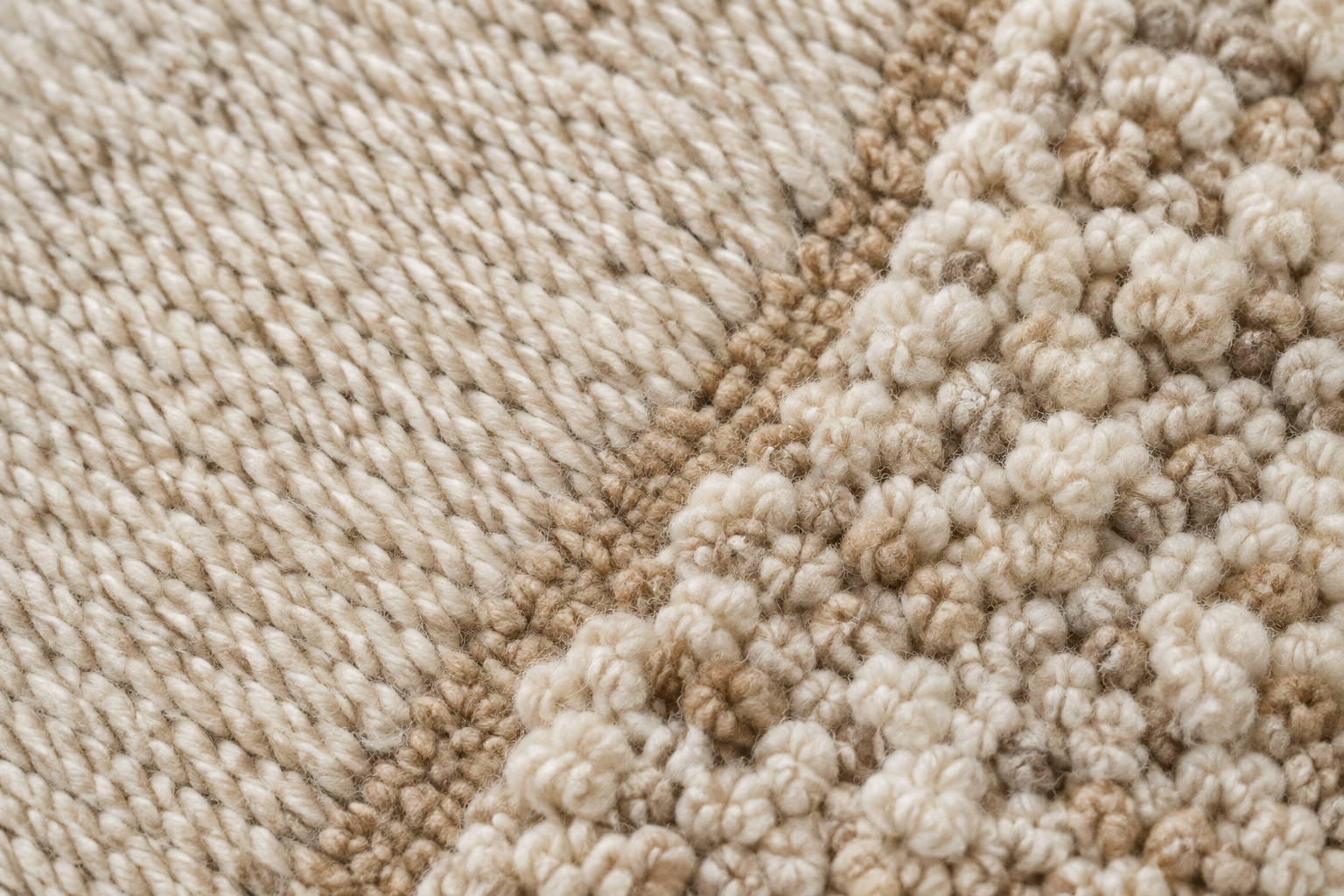
One interesting option is a rug made from a blend of wool and Tencel.
Why combine them?
Because each material brings different characteristics to the final product.
Wool can contribute:
- Strength
- Resilience
- Warmth
- Natural texture
Tencel can contribute:
- Softness
- Smoothness
- Subtle sheen
- Rich visual depth
A well-designed wool-Tencel rug can therefore offer a balance between performance and luxury.
This type of combination is particularly useful for modern handmade rugs where designers want both texture and visual sophistication.
For example, a rug may use wool as the primary fiber while incorporating Tencel into specific design elements to create highlights and contrast.
10. Which Is More Sustainable: Wool or Tencel?
Sustainability is becoming an increasingly important factor when buying home décor.
Both wool and Tencel have sustainability advantages, but they are different materials and should not be treated as identical.
Wool is a natural, renewable animal fiber. It is biodegradable under suitable conditions and has been used for generations.
Tencel is a regenerated cellulose fiber produced from wood-based cellulose. Tencel fibers are known for their wood-based origin and manufacturing processes designed around efficient resource use.
However, sustainability depends on more than just the fiber.
Consider:
- Where the material comes from
- How it is processed
- Dyeing methods
- Manufacturing practices
- Rug lifespan
- Packaging
- Transportation
- End-of-life disposal
A rug that lasts for many years can be a better long-term purchase than one that needs to be replaced frequently.
11. Wool vs Tencel: Which Is Better for Pets?
If you have pets, consider durability and cleaning requirements.
Wool is often a strong option for pet-friendly homes because of its resilience.
However, no rug material is completely immune to pet stains, scratching, or damage.
Tencel may require more care if exposed to frequent spills or moisture.
If you have pets, consider:
- Low-pile construction
- Durable materials
- Easy-to-maintain designs
- Darker or patterned colors
- Professional cleaning options
You should also keep your pet's nails trimmed to minimize potential damage to the rug.
12. Which Rug Material Is Warmer?
Wool generally provides a warmer and more insulating feel.
This is one reason wool rugs are popular in bedrooms, living rooms, and cozy spaces.
The natural structure of wool fibers helps create a comfortable barrier between the floor and your feet.
Tencel tends to feel smoother and cooler rather than warm and woolly.
Therefore:
For warmth → Wool
For silky softness → Tencel
13. Which Is Better for a Luxury Interior?
Both materials can work in luxury interiors, but they create different aesthetics.
Wool creates:
- Warm luxury
- Natural elegance
- Timeless sophistication
- Textural depth
Tencel creates:
- Contemporary luxury
- Silky elegance
- Subtle shine
- Sophisticated color variation
For a modern luxury apartment with clean lines, neutral furniture, and metallic accents, a Tencel rug can create a beautiful finishing touch.
For a warm luxury interior featuring wood, natural materials, and traditional craftsmanship, wool may be more appropriate.
14. Does Tencel Have a Sheen?
Yes.
One of the defining visual characteristics of Tencel is its smooth surface and natural-looking sheen.
Depending on the rug construction and pile direction, the surface can reflect light differently from different angles.
This can create a phenomenon often described as shading or color variation.
For example, a Tencel rug may appear slightly lighter or darker depending on how the pile is lying and how light falls across the surface.
This effect can be part of the material's visual appeal.
15. Why Does My Handmade Rug Look Different From Different Angles?

This is particularly important when buying Tencel rugs.
Handmade rugs can display variations in color and texture depending on:
- Fiber direction
- Lighting
- Pile height
- Construction
- Material
- Vacuuming direction
- Viewing angle
Tencel's smooth and light-reflective properties can make these changes more noticeable.
This does not necessarily mean the rug has changed color or is defective.
It can simply be a characteristic of the fiber and pile.
16. How Much Does a Wool or Tencel Rug Cost?
The price of a handmade rug depends on much more than its material.
Important factors include:
- Size
- Fiber quality
- Knot density
- Construction method
- Design complexity
- Pile height
- Artisan workmanship
- Customization
- Finishing
- Production time
A hand-knotted wool rug, for example, can cost considerably more than a basic machine-made rug.
Similarly, a premium handmade Tencel rug may command a higher price because of its material, design, construction, and craftsmanship.
Therefore, it is better to compare rugs based on overall quality and construction, rather than simply comparing the price per square foot.
17. Wool vs Tencel: Which Should You Buy?
The best choice ultimately depends on your priorities.
Choose a wool rug if you want:
- Long-term durability
- High-traffic performance
- Warmth
- Natural texture
- Resilience
- A timeless look
- A family-friendly option
Choose a Tencel rug if you want:
- Exceptional softness
- A silky texture
- Subtle sheen
- Sophisticated colors
- Contemporary luxury
- A decorative statement piece
Choose a wool-Tencel blend if you want:
- A combination of durability and softness
- Textural variation
- Visual depth
- A premium handcrafted appearance
Wool vs Tencel: Final Verdict
So, which material is better?
There is no universal winner.
Wool is generally the better choice for durability, resilience, warmth, and everyday use.
Tencel is generally the better choice for softness, silky texture, visual richness, and contemporary luxury.
Your room and lifestyle should determine your choice.
For a busy living room or family space, a high-quality wool rug may be the more practical investment.
For a bedroom, formal sitting room, or sophisticated low-traffic space, Tencel can create an exceptionally elegant atmosphere.
And if you want characteristics from both materials, a wool-Tencel blend can be an excellent option.
At Bhadohi Loom, handmade rugs are created with an emphasis on craftsmanship, thoughtful design, and quality materials. Whether you prefer the natural warmth of wool or the luxurious appearance of Tencel, choosing the right material is the first step toward finding a rug that complements your space and lifestyle.
A rug is more than a decorative accessory. It defines a space, adds texture, creates warmth, and can become part of your home for years.
Choose the material that works best for your room—not simply the material that sounds most luxurious.
Frequently Asked Questions
1. Are Tencel rugs better than wool rugs?
Not necessarily. Tencel and wool have different advantages. Tencel is known for softness and a silky appearance, while wool is generally more durable, resilient, and suitable for high-traffic areas.
2. Are wool rugs durable?
Yes. High-quality wool is naturally resilient and can perform very well in busy areas when properly maintained.
3. Are Tencel rugs soft?
Yes. Tencel is known for its smooth, silky, and soft feel, which makes it particularly attractive for luxury and bedroom rugs.
4. Is wool better for high-traffic areas?
Generally, yes. Wool's natural resilience makes it a strong choice for living rooms, hallways, and other frequently used areas.
5. Are Tencel rugs suitable for bedrooms?
Yes. Tencel can be an excellent bedroom choice because of its softness and luxurious appearance.
6. Can Tencel rugs be used in living rooms?
Yes, but consider the amount of traffic. Tencel can work particularly well in formal or moderately used living spaces.
7. Which is easier to clean, wool or Tencel?
Wool is generally more forgiving for everyday use. Tencel requires more careful cleaning and should be handled according to the manufacturer's care instructions.
8. Are wool rugs good for Indian homes?
Yes. Wool rugs can work very well in Indian homes, particularly in living rooms, bedrooms, and other areas where durability and comfort are important.
9. Do Tencel rugs have a shiny appearance?
Tencel can have a subtle natural sheen because of its smooth fibers. The appearance can also change slightly depending on the direction of the pile and lighting.
10. Can wool and Tencel be combined in one rug?
Yes. Wool-Tencel blends are used to combine characteristics of both fibers, such as wool's resilience and Tencel's softness and visual sheen.
